
We earn a small commission if you buy through our links — at no extra cost to you. How we review →
Quick Answer: The most impactful AI tools trending in 2026 are: Cursor (AI coding — fastest-growing dev tool), Perplexity (AI search — replacing Google for millions), Suno (AI music — professional tracks from text in seconds), NotebookLM (AI research — Google’s free tool for document intelligence), and Runway Gen-3 (AI video — text-to-video reaching cinematic quality). Across all categories, the shift is from AI as a generator to AI as a collaborator that takes multi-step autonomous actions.
What’s Actually Changed in AI in 2026
AI tool adoption has moved past the early-adopter phase. By early 2026, over 400 million people use AI tools weekly (OpenAI), and the conversation has shifted from “should we use AI?” to “which AI tools, and how?” The categories that seemed experimental in 2023 — AI video, AI voice, AI coding — now have production-ready tools used by professionals daily.
Three trends define AI in 2026. First: AI agents — tools that don’t just respond to prompts but autonomously take multi-step actions (browse the web, write code, run it, fix errors, submit a form). Second: multimodal AI — every leading model now handles text, images, audio, video, and code in a single interface. Third: local and private AI — smaller models that run entirely on your device, with no data leaving your machine, are now powerful enough for most business tasks.
This guide covers the 10 most significant AI tool categories trending in 2026 — with the leading tool in each, honest assessment of where they stand, and who should be using them.
10 AI Tools Trending in 2026 — By Category
| Category | Leading Tool | Price | Who it’s for | Trending score |
|---|---|---|---|---|
| AI Coding | Cursor | $20/mo | Developers | 🔥🔥🔥🔥🔥 |
| AI Search | Perplexity | Free / $20/mo | Everyone | 🔥🔥🔥🔥🔥 |
| AI Image Generation | Midjourney v7 | $10/mo | Creatives, marketers | 🔥🔥🔥🔥 |
| AI Video | Runway Gen-3 | $15/mo | Video creators | 🔥🔥🔥🔥 |
| AI Voice | ElevenLabs | Free / $5/mo | Podcasters, content creators | 🔥🔥🔥🔥 |
| AI Music | Suno v4 | Free / $8/mo | Content creators, marketers | 🔥🔥🔥🔥🔥 |
| AI Research | NotebookLM | Free | Students, researchers, analysts | 🔥🔥🔥🔥🔥 |
| AI Presentations | Gamma | Free / $10/mo | Business, education | 🔥🔥🔥 |
| AI IDE | GitHub Copilot | $10/mo | Developers (enterprise) | 🔥🔥🔥🔥 |
| AI Automation | n8n + AI Agents | Free / $24/mo | Technical teams | 🔥🔥🔥🔥 |
1. Cursor — The AI Coding Tool Everyone Is Switching To

Category: AI Coding | Price: Free (2,000 completions) / Pro $20/month | Growth: 10x user growth in 12 months
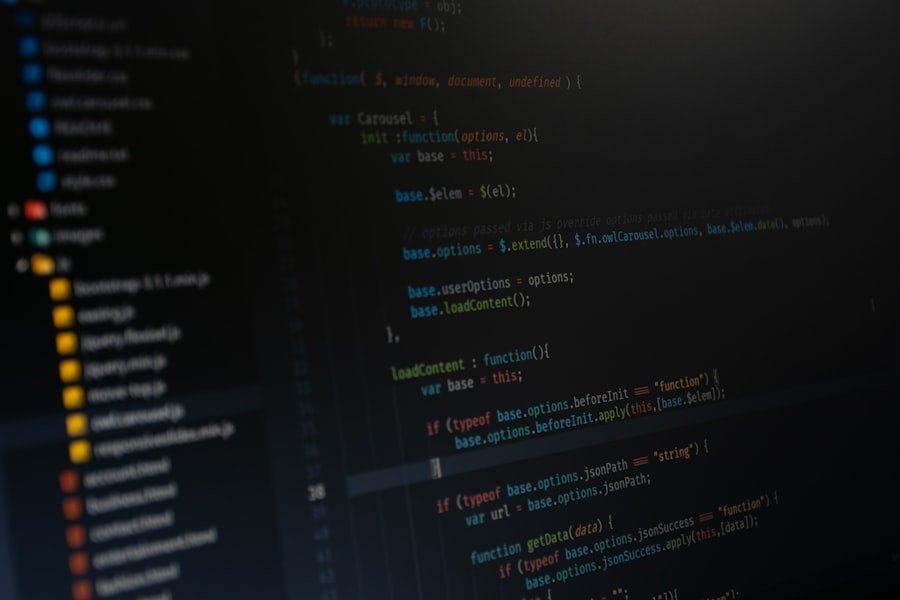
Cursor is the breakout developer tool of 2025–2026. Built on VS Code with GPT-4o, Claude, and Gemini deeply integrated, Cursor doesn’t just autocomplete code — it understands your entire codebase context and can rewrite files, fix bugs across multiple files simultaneously, generate tests, and explain any section of code on request. The Composer feature takes a natural language description (“add user authentication with JWT tokens”) and makes the necessary changes across multiple files at once.
Developers who switch from GitHub Copilot to Cursor consistently report 2–3x productivity gains on complex tasks. The ability to work across the whole codebase (not just the current file) is the decisive difference. For non-developers: Cursor is making programming genuinely accessible — many small business owners are now building and maintaining their own tools with Cursor’s assistance.
🔗 Get Cursor — Free Plan Available →
2. Perplexity — AI Search That’s Replacing Google for Millions

Category: AI Search | Price: Free / Pro $20/month | Monthly queries: 500M+ (2026)
Perplexity has crossed from “interesting experiment” to mainstream. It answers questions with cited sources, real-time web data, and follow-up conversation — addressing the core failure of ChatGPT (no sources, knowledge cutoff) and the core failure of Google (10 blue links requiring you to synthesise across pages). For research, fact-checking, and quick professional queries, Perplexity is now the default for a significant slice of knowledge workers.
Why this matters for content creators: Perplexity Spaces and the Pages feature generate research summaries and formatted reports from any topic. For the content workflow covered in our AI content writing guide, Perplexity has become an essential research layer before writing.
3. Midjourney v7 — AI Image Generation Reaches Professional Quality
Category: AI Image Generation | Price: Basic $10/month | Version: v7 (2026) with improved photorealism
Midjourney v7 produces images that are routinely mistaken for professional photography. The style control, consistency features (generating the same character or product across multiple images), and prompt adherence have reached a level where many commercial photographers and stock image libraries are directly impacted. For marketers, bloggers, and small businesses that previously paid for stock photography or commissioned illustrations, Midjourney at $10/month is transformative.
The trending use cases in 2026: product mockups for e-commerce, blog post featured images (like those on this site), social media content, brand style guides, and presentation visuals. For businesses wanting to try AI image generation without Midjourney’s Discord-based interface, Adobe Firefly (in Creative Cloud) and DALL·E 3 (in ChatGPT Plus) are strong browser-based alternatives.
4. Runway Gen-3 — AI Video Goes Mainstream

Category: AI Video Generation | Price: Standard $15/month | Competitors: Sora (OpenAI), Kling, Veo 2 (Google)
AI video generation has gone from impressive demo to practical production tool in 2026. Runway Gen-3 Alpha generates 10-second video clips from text descriptions or reference images with cinematic camera control, consistent subjects, and significantly reduced visual artifacts versus earlier models. For social media content, product demonstrations, explainer videos, and ad creatives, short AI-generated video clips are now a standard part of content production workflows.
The competitive landscape is fierce: OpenAI’s Sora, Google’s Veo 2, and Chinese challenger Kling each have distinct strengths. Runway leads on creative control and professional workflow integration. For business users who need video content without a production budget, any of these tools have crossed the threshold of “good enough for most use cases.”
5. ElevenLabs — AI Voice That’s Indistinguishable from Human

Category: AI Voice | Price: Free (10K chars/mo) / Starter $5/month | Use cases: Podcasts, audiobooks, video narration, accessibility
ElevenLabs produces the most natural-sounding AI voices available in 2026. The quality gap between ElevenLabs and other text-to-speech tools is significant — it handles intonation, pacing, emotional inflection, and accents in a way that genuinely sounds human rather than robotic. The voice cloning feature can replicate a voice from a 1-minute audio sample with high accuracy.
For content creators: turning blog posts into podcast episodes, narrating video scripts, creating audiobook versions of written content, and producing multilingual versions of content without a recording studio. The free plan (10,000 characters/month) is sufficient for testing and light use. At $5/month, the Starter plan covers most individual content creator needs.
6. Suno v4 — AI Music Generation for Everyone

Category: AI Music | Price: Free (50 songs/day) / Pro $8/month | Output: Full songs with vocals, instruments, and mastering
Suno v4 is arguably the most surprising AI tool on this list. Input a text description — “upbeat acoustic indie pop about coffee and mornings, female vocals” — and Suno produces a complete, professional-sounding song with vocals, instrumentation, and mastered audio in about 30 seconds. The quality has surpassed “impressive demo” and entered “commercially usable” territory for many applications.
For businesses: background music for videos, podcasts, and ads without licensing fees; branded jingles; content creation for social media. The free plan is generous — 50 songs per day with commercial use rights on the Pro plan. Content creators are using Suno-generated tracks as background music for YouTube videos, podcasts, and social content, eliminating stock music subscription costs entirely.
7. Google NotebookLM — The Free AI Research Tool Everyone Should Be Using
Category: AI Research | Price: Free / Plus $20/month | Made by: Google DeepMind
NotebookLM is Google’s free AI research tool and one of the most underrated tools on this list. Upload any documents — PDFs, articles, Google Docs, YouTube URLs — and NotebookLM creates an AI that has read and understands your specific source material. You can ask questions, get summaries, find contradictions across sources, and generate study guides — with citations pointing to the exact source passage for every answer.
The Audio Overview feature (launched 2024) is genuinely remarkable: it turns your uploaded documents into a natural-sounding two-host podcast discussion of the content — useful for absorbing long reports, research papers, or competitor content while commuting or exercising. For content creators researching a topic, for analysts reading multiple reports, and for students, NotebookLM has become an essential tool and it’s completely free.
🔗 Try Google NotebookLM Free →
8. Gamma — AI Presentations Without PowerPoint Pain

Category: AI Presentations | Price: Free (unlimited) / Plus $10/month | Output: Presentations, docs, and websites
Gamma generates a complete, polished presentation from a text prompt or outline in under 60 seconds. No templates to fight with, no alignment issues, no hours spent on slide design. The AI handles layout, typography, colour schemes, and image selection — you focus on the content. The output quality is consistently professional, covering use cases from business pitches and sales decks to educational content and client proposals.
The free plan is genuinely unlimited — you can create as many presentations as you want (with Gamma branding on exports). At $10/month Plus, branding is removed and you get analytics on who viewed your presentation. For small businesses presenting to clients or investors, Gamma has eliminated the “we need a designer to make this look good” problem entirely.
9. GitHub Copilot — The Enterprise AI Coding Standard

Category: AI Coding (Enterprise) | Price: $10/month individual / included in some GitHub plans | Users: 1.8M+ (2026)
GitHub Copilot remains the dominant AI coding tool in enterprise environments where Cursor hasn’t yet penetrated — largely because Copilot integrates into whatever IDE a developer already uses (VS Code, JetBrains, Neovim, Visual Studio) without requiring a switch. The 2025 upgrade to Copilot Workspace lets developers describe a GitHub issue in natural language and get a full implementation plan with code changes across multiple files — closing the gap with Cursor significantly.
For businesses: GitHub Copilot Business ($19/user/month) includes centralised policy management, IP indemnification, and security vulnerability filtering — features that enterprise legal and security teams require before approval. If your developers are already on GitHub and need AI assistance that IT can manage centrally, Copilot Business is the path of least resistance.
10. AI Agents — The Biggest Trend of 2026
Category: AI Agents | Leading platforms: Claude (Anthropic), ChatGPT Operator (OpenAI), Zapier Agents, n8n AI nodes | Status: Early production stage
AI agents are the dominant trend of 2026 — not a single tool, but a paradigm shift in how AI is used. An AI agent doesn’t just answer a question; it autonomously takes multi-step actions to complete a goal: browse the web, write and execute code, fill out forms, send emails, update spreadsheets, and coordinate with other agents. Instead of you prompting AI to help, you give AI a goal and it works toward it independently.
Practical 2026 examples: a sales agent that finds prospect contact information, researches their company, drafts a personalised outreach email, and schedules a follow-up — all autonomously. A content agent that monitors a topic, pulls trending articles, drafts a summary post, and queues it for your review. A customer support agent that handles tier-1 queries, escalates edge cases, and logs everything in your CRM.
For building AI agents without code: Zapier Agents and n8n’s AI Agent nodes are the most accessible entry points. For developers, LangChain and CrewAI provide the frameworks for building custom agents. This is still early-stage technology — agents fail on complex, ambiguous tasks — but the trajectory is clear: 2026 is year one of the agent era in business software.
How to Choose Which AI Tools to Adopt in 2026
The average professional who tries to use every trending AI tool burns time and achieves nothing. The strategic approach: identify your biggest time sinks, find the AI tool that addresses exactly that bottleneck, and master one tool before adding another.
Start here based on your role: Content creators → Perplexity (research) + Suno (audio) + Runway (video clips). Developers → Cursor (coding) + GitHub Copilot (if enterprise). Business owners → NotebookLM (research) + Gamma (presentations) + n8n or Zapier (automation). Marketers → Midjourney (visuals) + ElevenLabs (audio) + our AI content writing stack.
AI Tools Trending in 2026 — FAQs
What is the most popular AI tool in 2026?
By user count, ChatGPT (OpenAI) remains the most widely used AI tool with 200M+ weekly users. But the fastest-growing tools in 2026 are Cursor (AI coding), Perplexity (AI search), and Suno (AI music) — each growing at 5–10x year-over-year rates. Among business users specifically, Microsoft Copilot (embedded in Microsoft 365) has the broadest enterprise adoption due to its distribution through existing M365 subscriptions.
Are AI tools worth it for small businesses in 2026?
Yes — particularly the free tiers. NotebookLM (free), Gamma (free), Perplexity (free), ChatGPT free tier, Suno free, and ElevenLabs free collectively represent more AI capability than enterprises had access to for any price 3 years ago. The paid tools in this list (Cursor at $20/mo, Midjourney at $10/mo) offer positive ROI for any small business that produces visual content or writes software. The question in 2026 is no longer whether AI is worth it — it’s which specific tools match your specific workflows.
What AI tools are replacing traditional software?
In 2026: Perplexity is replacing Google for research queries. Gamma is replacing PowerPoint for quick presentations. Suno is replacing stock music subscriptions. ElevenLabs is replacing voiceover agencies for standard narration work. Cursor is replacing traditional IDEs for developers willing to adapt. Midjourney is replacing stock photo subscriptions for many use cases. None of these replacements are complete — the traditional alternatives still have strengths — but the direction is clear.
Final Verdict
The AI tools that matter most in 2026 are the ones that remove a specific bottleneck in your work — not the ones with the most hype. NotebookLM is the most underused free tool available. Cursor is the most transformative for anyone who writes code. Perplexity is the most immediately useful for day-to-day research. Start there, master the tool, then expand your stack.
— Manik Chandra Dhor, Last reviewed June 2026
Related reading: